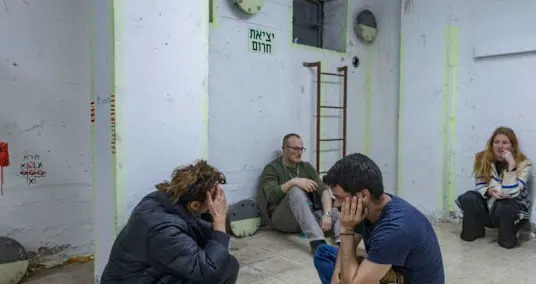
The soldier and bereaved families spoke on the necessity of equal conscription amid the IDF's manpower shortage.
Bereaved families and a wounded soldier spoke on the urgency of equal conscription to Israel’s military during a session of the Knesset’s Foreign Affairs and Defense Committee on Sunday, as lawmakers debated advancing the bill to enforce haredi (ultra-Orthodox) conscription to the IDF.
A severely wounded reservist, who lost his leg and hand in battle, spoke on the need for a law that would ensure haredi conscription to the IDF. Other participants in the panel also discussed necessary changes to the bill in its current form.
The reservist told the panel that he was speaking during Israel’s official appreciation week for wounded soldiers.
“We are in a historic moment in our country, and we need everyone,” the wounded reservist said, calling on haredi men to serve. “The IDF is asking for recruits, and we must respond.”
Promoting integration of the haredi public into workforce
The lengthy meeting continues the marathon discussions on the bill, which have been ongoing since last week. This session focused on section 26G, which deals with “designated vocational training.”

The purpose clause of the bill has several aims, among them promoting the integration of the haredi public into the workforce. It was proposed to delete the section of the bill in the outline so it would not include the goal of promoting haredi employment and instead focus on conscription to the IDF.
IDF representatives justified the change due to the military’s manpower shortage, requiring conscripts to serve in combat, following more than two years of war since the October 7, 2023, attacks.
Foreign Affairs and Defense Committee Chair MK Boaz Bismuth (Likud) laid out his updated version of the legislation to the panel for the first time last week. The outline has faced major pushback from multiple coalition members and opposition MKs, narrowing the chances of the bill passing its second and third readings in the Knesset plenum.
The two haredi parties, Shas and United Torah Judaism, left the coalition in July over disagreements surrounding the bill, which had previously been advanced by former committee chair MK Yuli Edelstein (Likud).
Critics of Bismuth’s revised bill argue that it still fails to enforce haredi conscription, stalls time, and attempts to appease the haredi parties to return to the government.
LATEST POSTS
- 1
 New movies to watch this weekend: See 'Predator: Badlands' in theaters, rent 'Black Phone 2,' stream Guillermo del Toro's 'Frankenstein' on Netflix
 - 2Figure out How to Analyze Medical attendant Compensation Patterns Across Different Specializations
- 3'Wuthering Heights' trailer features Margot Robbie and Jacob Elordi in a steamy forbidden romance
- 4Really focusing on Succulents: Tips and Procedures
- 5ISS astronaut evacuation shouldn't interfere with upcoming Artemis 2 moon mission, NASA chief says


- Careful Nurturing: Techniques for Bringing up Tough Children
- Former 'Bachelorette' welcomes 1st baby via emergency c-section
- Find the Abilities Required for Advanced Advertising Position
- Innovative Versatility: Examples of overcoming adversity from Entrepreneurs
- Andrew McCarthy's awe-inspiring image of a skydiver in front of the sun
- SpaceX launches Italian Earth-observing satellite to orbit on the 1st mission of 2026 (video)
- Under pressure at home, Belgium's leader treads a tight rope with EU partners over funds for Ukraine
- Help Your Efficiency: 10 Authoritative Apparatuses to Attempt
- Only 30% of young people in Israel optimistic about future, Aluma survey reveals